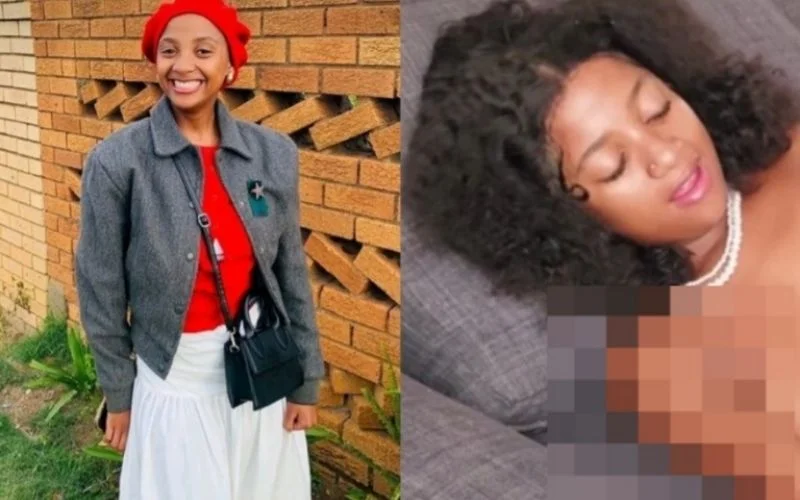
Mzansi never sleeps, and once again social media has shown that no story stays buried for long. In the latest reminder of this reality, A 20-year-old woman named Lerato Molwelang has found herself at the centre of a nationwide conversation after an explicit video allegedly featuring her began circulating on adult platforms and across social media timelines.
South Africans lerato molwelang circulating video
Until recently, Lerato lived a relatively low-key life. Like many young South Africans navigating hustle culture, she spent her time on dating apps such as Tinder, exploring side hustles and pursuing opportunities that promised fast money and exposure. By her own account, she never imagined that a casual online match would turn her into a trending topic across Facebook pages, WhatsApp groups, and Twitter timelines.
In an interview with the Rotos Delegated Special Task Force (RDSTF), Lerato detailed how she met the man now at the centre of the controversy — a well-known adult content creator. Their interaction began like many dating-app conversations: friendly exchanges, flattering compliments, and talk of opportunity. She describes him as charming and persuasive, presenting promises of premium treatment and a potential entry into the modelling world.
What Lerato initially believed would be a simple meeting or informal interview soon took a more serious turn. Drawn in by the promise of upfront payment and reassured by the man’s confidence, she agreed to visit him. She admits she understood that intimacy might be involved but says she did not fully comprehend the scale of what she was agreeing to, particularly once cameras were introduced.
Lerato Molwelang leaked video
According to Lerato, she signed a contract without carefully reading or fully understanding its terms. At the time, she says her focus was on the money and the opportunity being presented. When she raised concerns about being filmed, she alleges that the man downplayed her worries, presenting the recording as a form of protection rather than content intended for online distribution.
The reality only became clear later. Lerato says she discovered that the footage had been uploaded to adult websites without her full understanding of how or where it would be used. When she confronted the man and asked for the video to be taken down, she claims his response was firm: she had signed a contract, accepted payment, and therefore consented to everything outlined in the agreement.
What followed was a rapid and overwhelming shift in her life. Almost overnight, Lerato went from being a private individual to a viral subject. Clips and screenshots circulated widely, and social media commentary poured in. Some users expressed sympathy, arguing that she had been manipulated due to her age and inexperience. Others were less forgiving, insisting that personal responsibility and informed consent could not be overlooked.
The situation escalated further when a popular Facebook page, Mash Wadi Drags, was accused of amplifying the video’s reach. Online discussions suggest that the page’s admin recognised Lerato as someone he had previously interacted with on Tinder. Old messages resurfaced, and the internet did what it often does — piecing together fragments and turning a personal situation into public spectacle.
Despite the backlash, ridicule, and endless memes, Lerato has chosen not to disappear from the public eye. Instead, she has opted to take control of the narrative. Acknowledging that the video is already widely available and that the damage, in her words, is “done,” she has announced plans to enter the adult entertainment industry on her own terms.
“I’m going public with it,” Lerato reportedly said. “If everyone has already seen it, I might as well own it and make money from it.” She has since hinted at launching an OnlyFans account, describing her decision as a way to turn a painful experience into financial independence.
Her decision has further divided public opinion. Supporters commend her resilience and refusal to be shamed, while critics argue that embracing the situation does not resolve deeper concerns around consent, power dynamics, and potential exploitation within informal content creation.
Beyond the viral drama, Lerato’s story has reignited broader discussions about contracts, informed consent, and the risks of entering agreements without legal guidance. Legal commentators online have emphasised that signing documents without fully understanding their implications can have lasting consequences — particularly in industries where digital content cannot be erased.
The incident also highlights how quickly private decisions can spiral into public judgment in the age of social media. Once content enters the online space, control is often lost, leaving individuals to navigate the aftermath under intense public scrutiny.
As the dust continues to settle, one thing is clear: this is more than just another trending story. It serves as a cautionary tale for young people chasing fast money and online visibility, a reminder of how easily opportunity and exploitation can blur, and a reflection of the unforgiving nature of the internet.